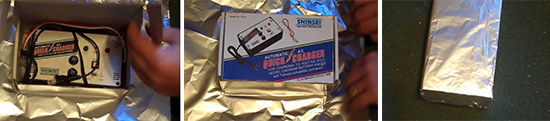
In recent years, the appeal of Faraday cages among survivalists has surged, due to an growing awareness of possible EM threats and the necessity for reliable protection of electronics. These innovative structures, designed to shield against EM fields, have turned into essential tools for those looking to safeguard their electronics from a variety of conditions, such as solar flares, EMP, and even everyday disruptions. For numerous individuals, a Faraday cage is more than a safeguard; it’s a vital component of their preparedness plan.
As the reliance on technology in daily life grows to increase, grasping the significance and functionality of Faraday cages has turned out to be vital. Whether you’re a novice to prepping or are an seasoned enthusiast, knowing what to look for in a Faraday cage can make all the difference. From the construction materials to the size and portability options, choosing the right cage is key to ensuring your devices remain safe and protected in unpredictable scenarios. This article will explore the essential features and considerations that every prepper should keep in mind when choosing a Faraday cage, aiding you make informed decisions for your personal electronics and preparedness strategies.
Key Attributes of Faraday Cages
Faraday cages are engineered to provide effective protection against electromagnetic radiation, making them crucial for defending vulnerable electronics. One of the primary elements to consider is the material used in the construction of the cage. https://frye-bachmann-3.blogbright.net/faraday-cages-versus-other-shielding-methods-advantages-and-disadvantages as gold, aluminum, and steel are superb choices due to their conductivity, which allows them to bounce back and absorb electromagnetic frequencies. The gauge of the material also plays a significant part; more robust materials generally offer better protection but can add to the mass and price.
Another key component is the structure of the cage itself. A well-constructed Faraday cage should have few openings since cracks can compromise its protective effectiveness. Mesh cages can be helpful for easy transport but must be made with sufficiently small enough mesh to impede higher frequency signals. In contrast, solid cages are commonly more effective but can be more cumbersome. Additionally, the cage should have a tight closure to stop any EM leakage, guaranteeing that the items remain protected.
Dimensions is a crucial consideration when picking a Faraday cage, as it needs to accommodate all planned devices adequately. https://articlescad.com/comprehending-the-restrictions-of-faraday-enclosures-167146.html that is too tight may not provide adequate protection, while one that is excessively large can be difficult to transport. It's crucial to consider the dimensions based on what devices will be stored within and the possible scenarios in which the cage will be utilized. By emphasizing on substance, design, and dimensions, preppers can choose an effective Faraday cage customized to their particular demands.
Components and Building
The efficacy of a Faraday enclosure largely is determined by the materials used in its building. Common choices include copper alloy, aluminium, and steel, each providing different degrees of conductivity and shielding abilities. Copper is known for its high conductivity, making it an ideal choice for optimizing signal attenuation. Aluminium is lighter and often more affordable, offering a satisfactory balance of performance and cost. Steel, while heavier and less efficient than Cu, provides durability and can be efficient in blocking lower frequency signals.
When considering construction, pay close attention to the gauge of the materials. More substantial materials commonly offer better shielding from EMI, but they can also increase weight and bulk. Mesh constructions can be feasible options, as they allow for light designs while still offering adequate shielding if the mesh size is suitable. The building technique, including welding or joining joints, can also impact the integrity and effectiveness of the Faraday enclosure. Making sure tight seams and connections is essential for preventing unintentional openings that could jeopardize the cage's protective qualities.
In addition to the substances and gauge, the overall configuration and assembly of the cage play significant roles in its functionality. Factors such as the internal structure, grounding methods, and even the presence of insulation can influence how well the cage functions. A well-designed cage will not only block electromagnetic waves but also ensure that stored items are safe and shielded from physical damage. Assessing all these aspects will help you choose or build a Faraday cage that satisfies your particular needs effectively.
Examination and Effectiveness
When it comes to ensuring that a Faraday cage provides the defense it asserts, testing its effectiveness is crucial. There are several methods to determine how well a cage blocks electromagnetic signals. One frequent technique is to use a radio frequency (RF) meter to assess signal strength inside the cage alongside the outside. By placing a device that transmits signals near the cage and observing the reception inside, users can identify the level of shielding achieved. If signals are still perceptible inside, it may imply that the cage needs improvements or is not built to specifications.
Another important aspect of testing a Faraday cage is to examine for any physical leaks that could weaken its shielding capabilities. This requires checking gaps, seams, or areas where the conductive material may not be continuous. Conductive materials must fully cover the electronics inside without breaks, as even small openings can let electromagnetic interference penetrate. Users should also consider evaluating with multiple types of frequencies, including those used by cell phones, radios, and Wi-Fi, to guarantee comprehensive protection across the spectrum.
Ultimately, the performance of a Faraday cage will also depend on understanding its design and construction quality. Factors such as the material used, the thickness of the metal, and the overall build can greatly impact performance. By dedicating time in extensive testing, individuals can make certain that their Faraday cage is not only a trustworthy safeguard against EMPs but also a solid solution for various electronic protection needs.